Outdoor Living · 7 min read
Outdoor Kitchen Countertop Trends for Charlotte NC (2026)
March 12, 2026 · The Granite House Team
March 12, 2026 · The Granite House Team
Charlotte has 200-plus days of usable outdoor weather. That's more than most cities in the country, and it's why outdoor kitchen countertops make real sense here — not as a luxury add-on, but as functional living space you'll actually use eight or nine months a year. The outdoor kitchen market in Charlotte has exploded, and the countertop choices matter more outdoors than they do inside. Get the wrong material and you're replacing it in two years.
Natural stone — granite and quartzite — handles outdoor conditions in Charlotte without issue. UV exposure, rain, humidity, temperature swings from summer heat to winter cold — granite takes all of it. It formed under conditions far more extreme than a Charlotte summer. Quartzite performs equally well outdoors. Both materials resist fading, won't warp, and hold up to direct sunlight year after year.
What doesn't work outdoors: quartz. Engineered quartz contains resin binders that break down under UV exposure. The color fades, the surface can yellow, and the structural integrity degrades over time. We see homeowners choose quartz for outdoor kitchens because it's cheaper upfront, and then call us two years later to replace it. Save yourself the headache — use natural stone outdoors.
Concrete and tile are other options you'll hear about. Concrete cracks in Charlotte's freeze-thaw cycles unless it's very well reinforced and sealed. Tile works on vertical surfaces but grout lines become a maintenance headache on horizontal countertops exposed to rain and food prep. For a countertop surface that's doing real work — holding a hot grill grate, getting rained on, sitting in 95-degree sun — nothing beats natural stone.
Charlotte sits in a humid subtropical climate zone — USDA zones 7b and 8a. That means your outdoor countertops face a specific set of challenges that a homeowner in Arizona or Colorado doesn't deal with. Here's the reality:
Summer heat and humidity. Average highs above 90°F from June through August, with humidity regularly pushing past 70%. That combination creates conditions where mold and mildew can grow on any porous surface that hasn't been properly sealed. On a dry-climate countertop, water evaporates fast and doesn't sit in the stone. In Charlotte, moisture lingers. Sealing your granite properly is the difference between a clean surface and one that's growing green by August.
Winter freeze-thaw cycles. Charlotte gets 40-plus nights below freezing each winter. That matters because any moisture that's absorbed into inadequately sealed stone will expand when it freezes. Over multiple winters, this freeze-thaw cycle can cause micro-cracks and surface pitting in porous materials. Dense granite and quartzite resist this far better than concrete, tile, or softer stones like limestone. But even granite needs to be sealed before winter to prevent moisture from getting into the pores.
Rain — 43 inches a year. Charlotte gets steady rainfall year-round, not just in one season. Your outdoor countertops are getting wet regularly from March through November, and that constant moisture exposure is what separates outdoor stone care from indoor. A countertop inside your kitchen might see a splash of water once a day. Your outdoor countertop is absorbing rain for hours at a time. Sealing schedule and stone density matter here more than color or pattern.
UV exposure. Charlotte averages about 217 sunny days per year. UV breaks down resin-based materials (that's why engineered quartz fails outdoors), but it doesn't affect natural stone. Granite and quartzite have been sitting in direct sunlight for millions of years before they ever reached your backyard. The colors stay true, the surface stays stable.
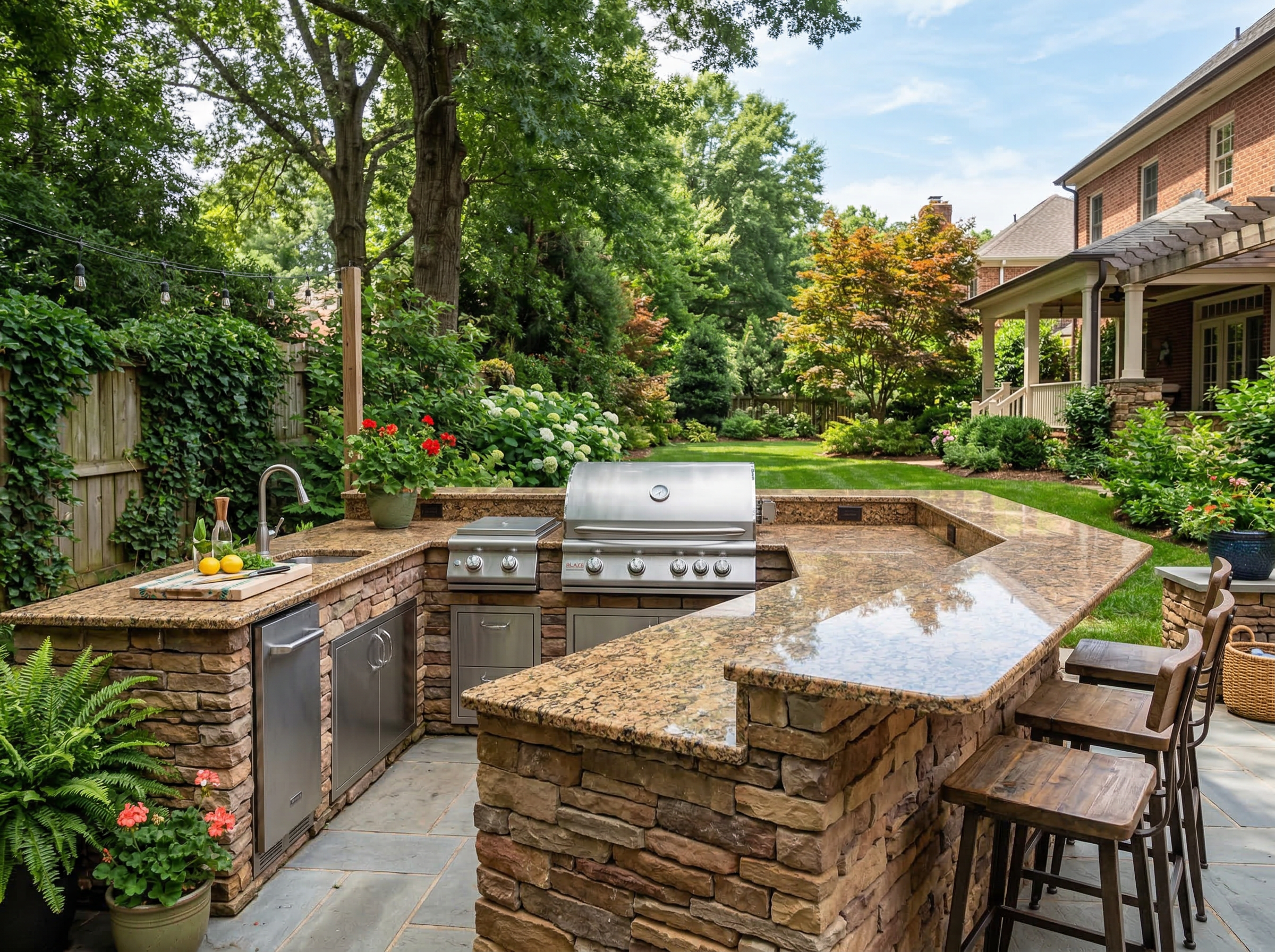
The most common outdoor kitchen configurations we're fabricating in Charlotte right now: built-in grill surrounds with granite countertops and a bar-height overhang for seating, wet bars with integrated sinks for entertaining, and pizza oven surrounds — the backyard pizza oven trend is still going strong. Some homeowners are building full outdoor kitchens with grill, smoker, sink, refrigerator, and 30-plus square feet of countertop space. Others start with a simple grill surround and expand later.
One setup that's gained ground in 2026: the outdoor bar island with a separate prep station. Instead of one long L-shaped counter, homeowners are placing a freestanding bar island a few feet from the main cooking area. This keeps the cook separate from the guests, gives more counter space for food prep, and creates a natural flow for entertaining. We're fabricating these with a polished top for the bar side and a leathered finish on the prep side — the texture gives better grip when you're working with wet or oily food. If you're interested in what leathered and other textured finishes look like, we covered that in our kitchen countertop trends for 2026 post.
Not every granite works equally well outdoors. Darker, denser granites perform best because they're less porous and hide outdoor wear better. The top picks for Charlotte outdoor kitchens in 2026:
Tan Brown — a rich brown with black and gold flecks that hides dirt and complements outdoor cabinetry. This is the most forgiving color for outdoor use. Pollen, dust, food stains — they all disappear against the busy pattern. Steel Gray — a consistent dark grey that looks sharp with stainless steel appliances. Clean lines, modern look, and it doesn't show water spots the way lighter stones do. Absolute Black — dramatic, dense, and nearly indestructible. This is the densest granite we carry, which means it absorbs the least moisture. If you want the lowest-maintenance outdoor countertop possible, this is it. Giallo Ornamental — for homeowners who want a lighter color outdoors, this cream-and-gold granite is denser than most light-colored options and holds up well with proper sealing.
All four are readily available, moderately priced, and proven performers in outdoor applications. For a full breakdown of what these and other materials cost in Charlotte, check our 2026 countertop cost guide.
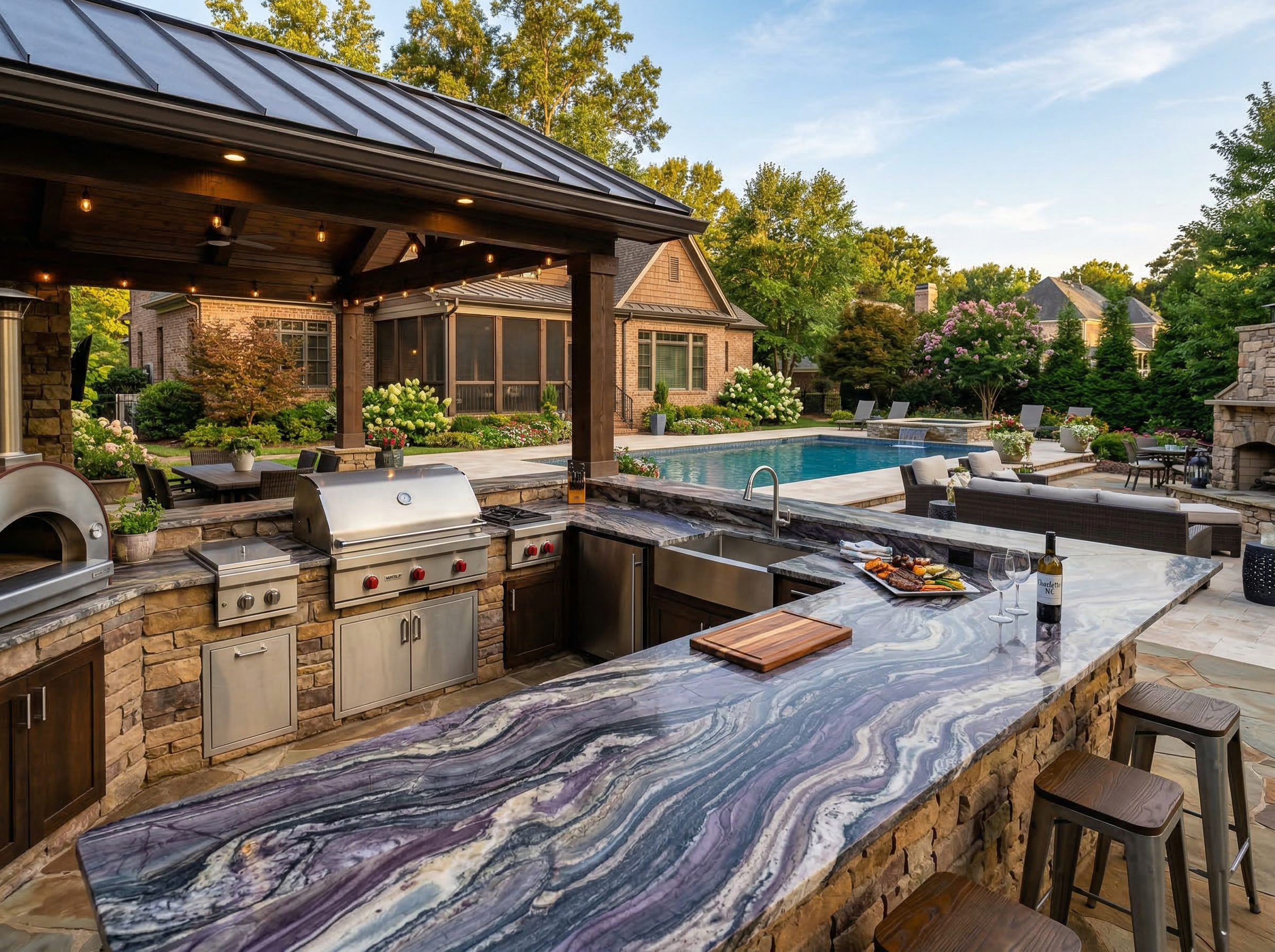
Outdoor countertops need to be 3cm thickness minimum — the extra mass handles the stress of outdoor use and provides the structural support needed for overhangs. Speaking of overhangs, if you want bar seating at your outdoor kitchen, plan for a 12 to 15 inch overhang with proper support brackets. This gives guests enough knee room while keeping the stone stable.
Sealing matters more outdoors. Charlotte gets roughly 43 inches of rain per year, and that moisture interacts with natural stone differently than indoor splashes. Seal outdoor granite every 6 months rather than the 12-month schedule for indoor surfaces. It's a 15-minute job that protects your investment.
Edge profiles matter outdoors too. Skip the ornate ogee or dupont edges for outdoor use. A simple eased edge or a slight bevel is easier to clean, less likely to chip, and doesn't collect debris in grooves. We recommend a standard eased edge for 90% of outdoor applications.
Drainage and slope. Your fabricator and contractor need to coordinate so the countertop has a very slight pitch — about 1/8 inch per foot — away from the house and toward the outer edge. This prevents water from pooling on the surface or running back toward your home's foundation. Standing water on stone is not a problem for a few hours, but if water pools consistently in the same spot for months, even granite will show wear.
Charlotte's four distinct seasons mean your outdoor countertops need different care throughout the year. Here's the schedule we give every customer:
This is your most important maintenance window. Start with a full inspection — look for any cracks, chips, or discoloration that developed over winter. Charlotte's freeze-thaw cycles can stress stone seams, so check where sections meet. Deep clean the entire surface with a pH-neutral stone cleaner (not vinegar, not bleach, not dish soap). Then apply a fresh coat of penetrating sealer. This spring seal is critical because it protects the stone through the high-humidity summer months ahead. March and April are also prime pollen season in Charlotte — that yellow coating won't damage the stone but it will stain if left sitting on an unsealed surface.
This is peak usage and peak humidity. Do a light cleaning with stone cleaner at least once a month, more often if you're grilling every weekend. Watch for mold and mildew — in Charlotte's summer humidity, organic growth can appear on stone surfaces within a week or two, especially in shaded areas. If you see any green or black spots, clean them immediately with a stone-safe mold remover. Cover your countertops with a fitted cover when not in use. The cover isn't just about rain — it blocks pollen, tree sap, bird droppings, and the constant fine layer of dust that settles on everything in a Charlotte summer. Wipe down the surface before and after each cookout.
Fall is your second sealing window. Before the first frost — usually mid-November in Charlotte — give the countertops a thorough deep clean and apply another coat of penetrating sealer. This fall seal is what protects the stone through winter's freeze-thaw cycles. Clear off fallen leaves and debris regularly; wet leaves left on stone can cause tannin staining, especially on lighter granites. October and November are also a good time to inspect and replace any caulking around sinks, faucets, and where the countertop meets the cabinet structure.
Keep the stone covered when you're not using it. Charlotte rarely gets heavy snow, but those 40-plus below-freezing nights are what cause damage if moisture has gotten into the stone. Never use de-icing salts or chemical de-icers on natural stone — they can etch the surface and cause permanent discoloration. If ice forms on the countertop, let it melt naturally or use warm (not boiling) water. After any hard freeze, do a quick visual inspection for new cracks or shifted seams. If you're still grilling in winter (and plenty of Charlotte homeowners do), wipe the surface dry after each use rather than letting water sit overnight when temperatures might drop below freezing.
Planning an outdoor kitchen?
We'll help you pick the right stone for Charlotte's climate. Get a free estimate →
"We see a lot of homeowners use quartz outdoors because it's cheaper upfront. Two years later they call us to replace it. The UV damage is real — the color shifts, the surface dulls, and it's not something you can fix. Granite costs a little more at the start but it lasts. I've seen 15-year-old outdoor granite countertops in Charlotte that still look the day they were installed. Spend it once, spend it right."
"The other thing I tell every outdoor kitchen customer — think about where the sun hits. If your countertop is in full afternoon sun, a dark granite like Absolute Black can get hot enough to feel uncomfortable to touch in July. That's not a durability issue, it's a comfort issue. If your setup faces west and gets direct afternoon sun, consider a mid-tone granite or plan for a pergola or shade structure over the cooking area. We'll look at your yard orientation during the estimate and give you an honest recommendation."
Ready to build your outdoor kitchen? Get a free outdoor kitchen estimate and we'll help you pick the right stone for your setup.
The Granite House — Charlotte NC
Factory-direct granite, quartz, quartzite and marble. Fabricated in our Charlotte shop, installed by our team. One honest price.
Get a free, no-pressure estimate from Charlotte's factory-direct countertop team.
GET A FREE ESTIMATE →